
Our Process · Six steps · From 0 to 1
Concept to shelf, in six steps.
Your end-to-end product partner from 0 to 1.
Six integrated steps — market sensing, concept, R&D, validation, sell-in, and manufacturing — under one roof. R&D, validation, and owned production in a single value system, so buyers can reduce development risk and move into stable production faster.
- ~4 wk
- Concept → functional sample
- 98%
- OTIF on active programs
- 90%+
- Line automation
- 500K+
- Units daily output
§01 — Step 01 · Market Signals
Every brief starts from real demand.
Track market trends, retailer signals, and category opportunities. We feed real platform data, competitor moves, and field research into every product brief — so concepts start grounded in demand, not guesswork.
Inputs
Platform Data & Trends
Amazon, Walmart, TikTok, Shopee rankings, keywords, reviews, and trend signals.
Competitor Tracking
Daily tracking of competitor launches, packaging, claims, pricing, and product upgrades.
First-Hand Market Feedback
Insights from meetings with brands, retailers, and distributors, combined with in-store research at local supermarkets to track market trends and product opportunities.
Outputs
Category Gap Insights
Gaps in formats, functions, scents, claims, and price points.
New Product Concepts
New product ideas with specs, claims, and packaging directions.
Product Push List
Selected product ideas, samples, selling points, and market insights shared with customers.
§02 — Step 02 · Product Concept
Turn insights into a product brief.
From insight to a written brief — direction, targets, and a single document R&D, design, sourcing, and costing can all build from.
Product Direction
Target user, usage scenario, format, and selling points.
Development Targets
Specs, claims, fragrance, packaging, and cost target.
Product Brief
Clear direction for R&D, sampling, design, sourcing, and costing.
- 1
Market Signal
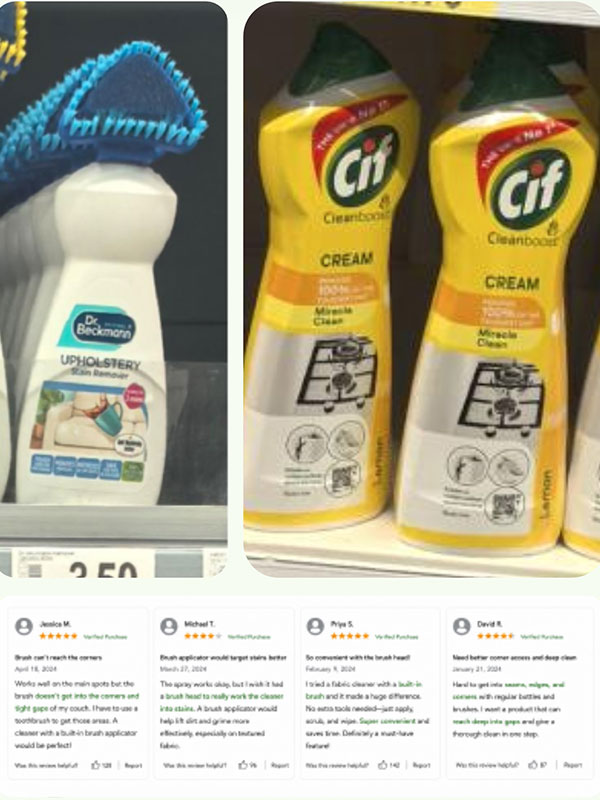
Data and customer feedback showed potential for a brush-applicator fabric cleaner.
- 2
Pain Point
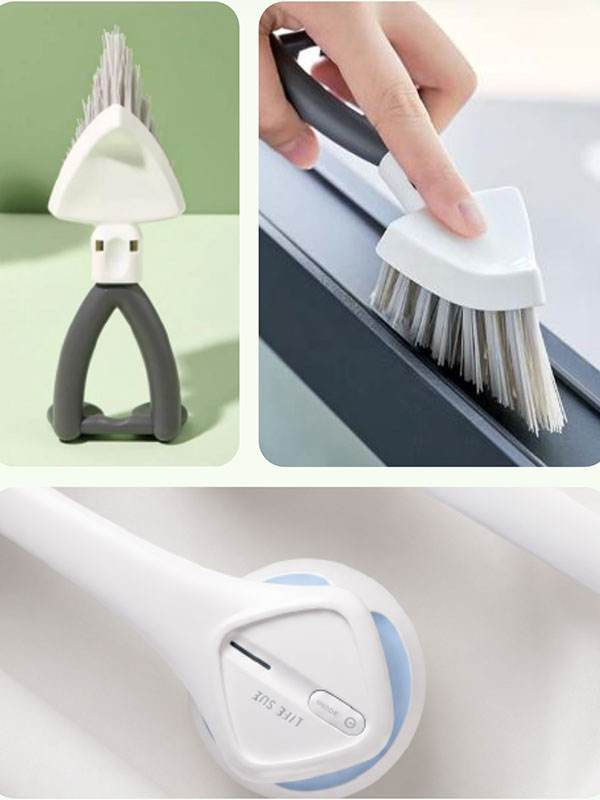
Reviews showed existing brushes struggled with corners and narrow gaps.
- 3
Product Concept
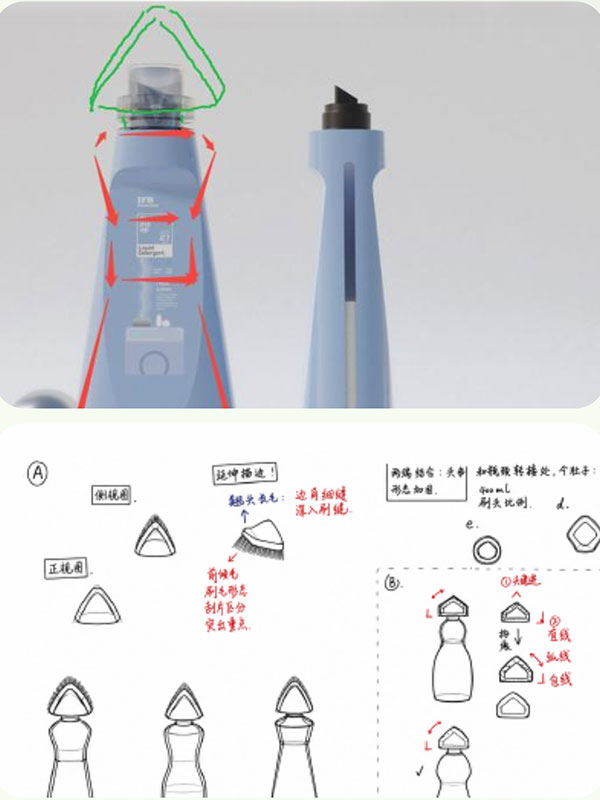
A 400ml upholstery stain remover with integrated brush applicator.
- 4
Design Solution
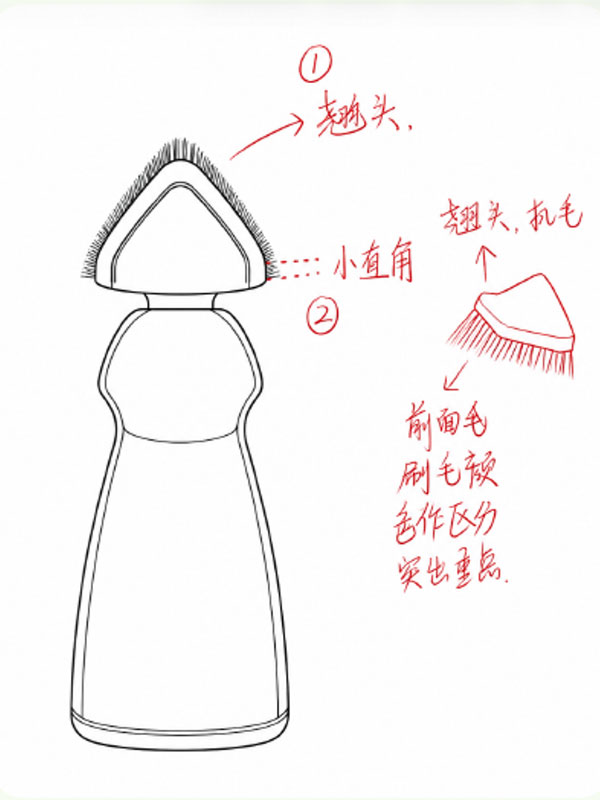
A pointed brush tip was created to reach dead corners more easily.
- 5
3D Review
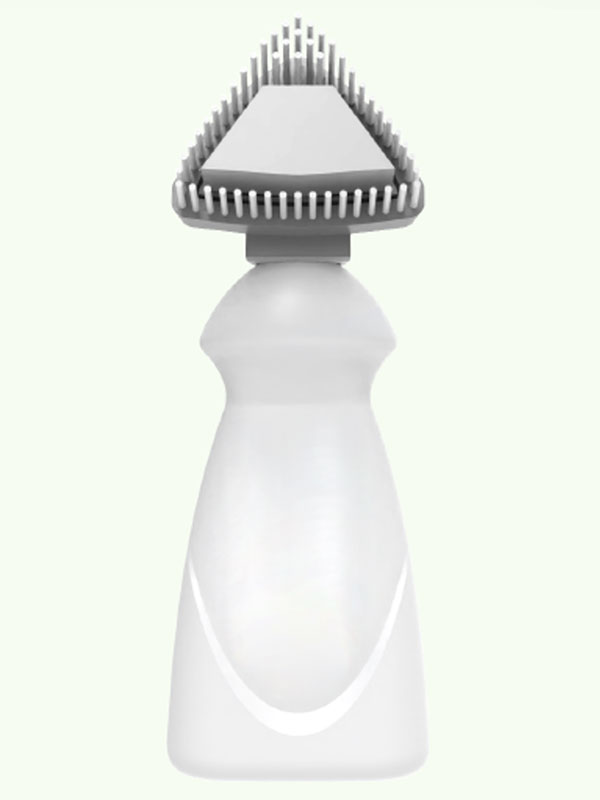
Bottle shape, brush structure, colors, and label were reviewed before production.
- 6
Final Product
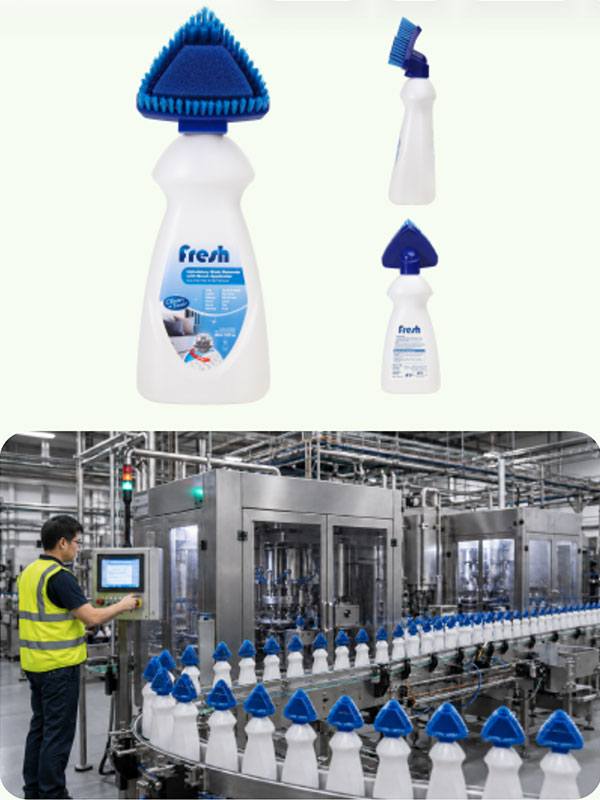
Turned into a retail-ready 400ml product.
§03 — Step 03 · R&D & Sampling
From product concept to workable samples.
Formula, fragrance, structure, packaging — formulation and industrial design run in parallel, not in sequence. Eliminates the “formula waits for tooling” bottleneck and gets to a workable sample faster.
Formulation Lab
- 11 chemical engineers, including 4 senior external experts
- Independent formula development for air care, cleaning, and personal care
- Initial formula development in around 4 weeks
- Regulatory requirements considered from the beginning
- Continuous cost optimization through raw material and process improvement
Industrial Design & Packaging Engineering
- 2 industrial designers + 1 tooling engineer
- 3D modeling, prototyping, mold follow-up, and sample improvement
- Patent review before structural development
- 30+ mold projects launched every year
§04 — Step 04 · Validation
Test before mass production. Reduce risk before launch.
Stability Testing
High/low temperature, light exposure, freeze-thaw, color change, fragrance retention.
Packaging & Structure Testing
Leakage, negative pressure leakage, deformation, drop test, component compatibility.
Performance Testing
Cleaning efficacy, fragrance intensity, fragrance duration, spray performance, residue check.
Compliance & Production Feasibility
SDS support, restricted-substance check, trial production review, label review, claim review.
STEP 01
Stability Testing
High/low temperature, light exposure, freeze-thaw, color change, fragrance retention.
STEP 02
Performance Testing
Cleaning efficacy, fragrance intensity, fragrance duration, spray performance, residue check.
STEP 03
Packaging & Structure Testing
Leakage, negative pressure leakage, deformation, drop test, component compatibility.
STEP 04
Compliance & Production Feasibility
SDS support, restricted-substance check, trial production review, label review, claim review.
§05 — Step 05 · Marketing & Sell-In
Customer-ready, not just factory-ready.
From product development to customer-ready presentation. New products are packaged into selling tools — decks, samples, spec sheets, pricing — so your buyer can review, select, and launch faster.
01 · Output
Product Presentation
Concepts, samples, pricing, selling points, and packaging direction.
02 · Output
Sales Materials
Decks, spec sheets, product images, claims, and usage scenarios.
03 · Output
Regular Updates
New product ideas and market insights shared through customer emails.
GoalMake it easier for customers to review, select, and launch new products.
§06 — Step 06 · Manufacturing & Delivery
Owned factories. Managed QA. On-time, every time.
Stable supply from owned factories with strong QA/QC control — production planning, automated lines, and reliable OTIF execution measured against confirmed PO dates.
Daily Manufacturing Capacity
By category · units / day
- Air Care120,000units / day
- Household Cleaning100,000units / day
- Personal Care80,000units / day
- Car Care50,000units / day
- Pet Care50,000units / day
- Others100,000units / day
- Total supporting capacity500Kunits / day
Get started
Ready to go from 0 to 1?
Tell us what you want to launch. We'll bring market insights, R&D depth, validation discipline, and owned manufacturing to the table — and ship it.